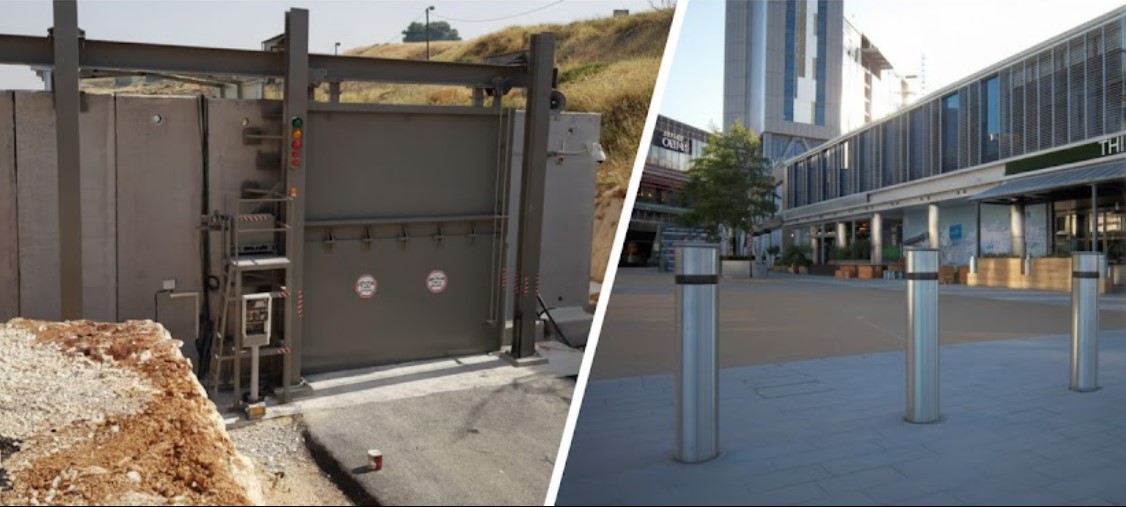


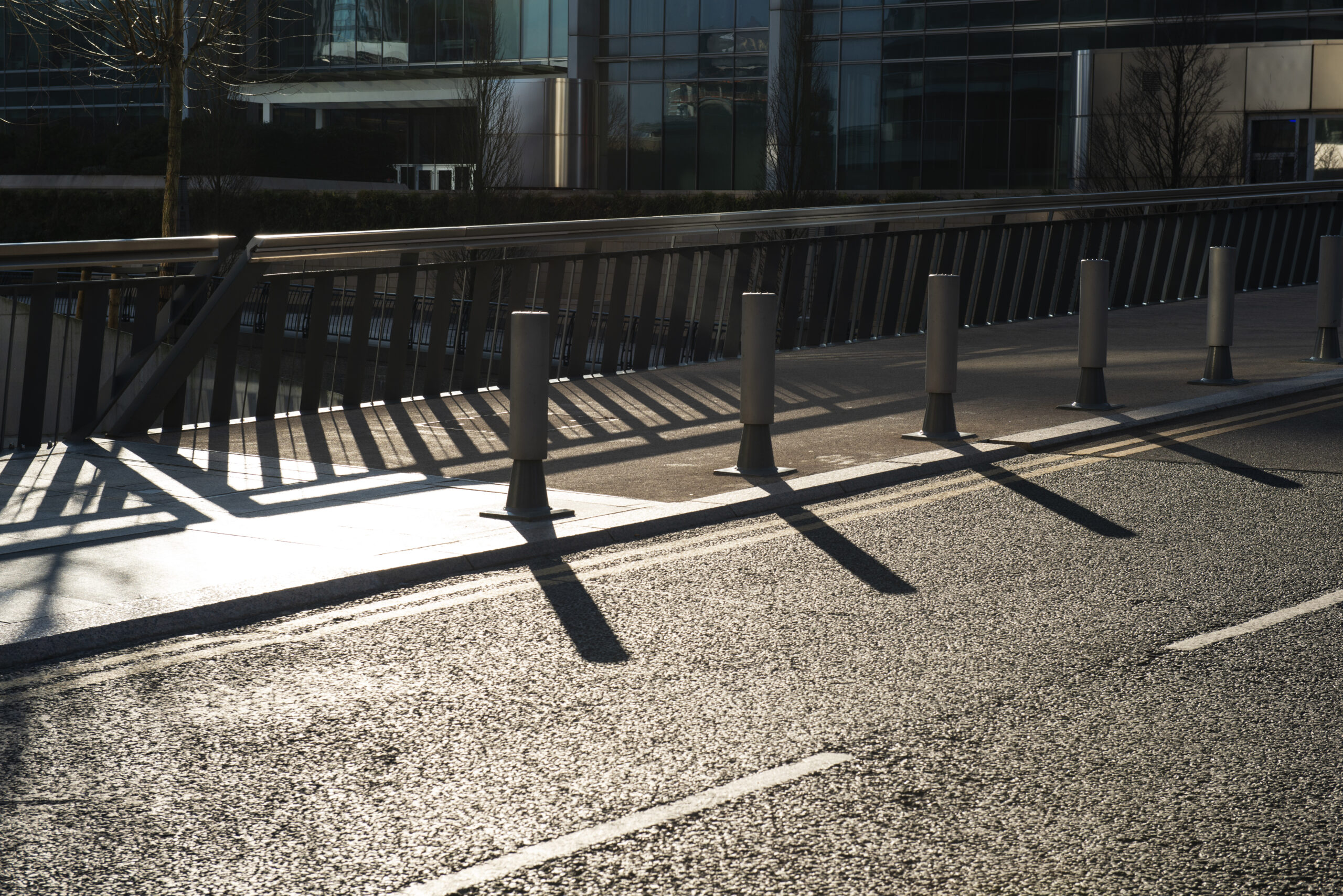
Vehicle-based intrusions represent one of the most persistent security threats facing government buildings, embassies, military installations, and critical infrastructure today. Unlike traditional perimeter fencing, crash-rated bollards provide verified, engineered protection against unauthorized or hostile vehicle access. For facility managers and security directors responsible for protecting high-value assets, understanding the differences between standard and crash-rated bollards is essential to implementing effective security architecture.
BGI Engitech specializes in manufacturing crash-rated bollards engineered to international ASTM/PAS68/IWA standards, providing organizations with dependable vehicle intrusion prevention solutions tailored to their threat assessment and site conditions.
What Are Crash-Rated Bollards?
Crash-rated bollards are structural posts specifically engineered and tested to stop vehicles of defined weights traveling at specified speeds. Unlike decorative or traffic-guiding bollards, crash-rated variants are subject to rigorous independent testing and certification to prove their capability to withstand and limit vehicle penetration.
The key distinction lies in certification. A crash-rated bollard carries documented evidence—typically a third-party test report—proving it meets recognized impact standards. This certification ensures that:
- The bollard can stop vehicles of specific mass and velocity
- Penetration (how far the vehicle travels through the Bollard) remains within defined limits
- The bollard maintains structural integrity post-impact
- Installation methods provide adequate anchorage depth and foundation
Understanding PAS 68 Crash Ratings
PAS 68 is a British standard that specifies the impact performance requirements for vehicle security barriers, including bollards. It evaluates a barrier’s ability to stop a vehicle under controlled test conditions. The rating is defined based on the following key parameters:
- Vehicle Type and Weight:
PAS 68 tests various vehicle categories, including:
-
-
- Cars
- Vans
- Trucks (ranging up to heavy goods vehicles of 7.5 tonnes and above)
-
- Impact Speed:
The standard measures the speed at which the vehicle impacts the barrier, typically:
-
-
- 30 mph (48 km/h)
- 40 mph (64 km/h)
- 50 mph (80 km/h)
-
- Vehicle Classification Code:
A typical PAS 68 rating includes details such as vehicle type, weight, and test speed. For example:
-
-
- V/7500[N2]/64/90:0.0/0.0
-
Where:
-
-
- V = Vehicle test
- 7500 = Vehicle weight in kg
- N2 = Vehicle category (medium truck)
- 64 = Impact speed in km/h
- 90 = Impact angle (degrees)
- 0/0.0 = Penetration distance (zero penetration indicates highest performance)
-
- Penetration / Performance Level:
The result indicates how far the vehicle travels beyond the barrier after impact. Lower penetration values indicate higher security performance.
A PAS 68-rated bollard with zero penetration demonstrates a very high level of protection, effectively stopping the tested vehicle with no significant breach beyond the barrier line.
Why Crash-Rated Bollards Matter for Critical Infrastructure
Government facilities, military installations, financial institutions, and data centers face genuine vehicle-based security threats. Historical incidents demonstrate the vulnerability of traditional fencing or poorly designed perimeter controls. Crash-rated bollards address this vulnerability through engineered, verified protection.
Protection Against Unintentional Collisions: Even accidental vehicle impacts can cause catastrophic damage. A bollard rated M30/P1 prevents a Vehicle from penetrating a protected zone, reducing liability and ensuring operational continuity.
Deterrence Value: Visible, properly spaced crash-rated bollards signal that a facility takes security seriously. The presence of certified barriers often prevents unauthorized vehicle approach entirely, as potential threats recognize the futility of penetration attempts.
Compliance with Security Standards: Government facilities, military sites, and regulated infrastructure are often required to meet specific anti-ram protection standards. Crash-rated bollards documented to PAS68 standards provide objective evidence of compliance.
Cost-Effective Long-Term Security: While initial installation requires engineering and foundation work, crash-rated bollards require minimal maintenance compared to electronic gates or personnel-dependent systems. Once installed, they provide 24/7 protection.
Selection Criteria: Matching Bollard Rating to Your Threat Profile
Choosing the correct crash-rating requires analysis of three factors:
- Adjacent Road Speed:High-speed roads create higher kinetic energy impacts. Facilities next to 45+ mph roads typically require M40 or M50 ratings. Low-speed parking areas may be adequately protected by M30 ratings.
- Approach Distance:How much space is available for a vehicle to accelerate before reaching the bollard? Longer approach distances (>500 feet) allow greater vehicle velocity, requiring higher M-ratings. Confined areas with minimal approach distance may perform adequately with M30.
- Threat Assessment:Critical infrastructure (government buildings, military sites, embassies) typically warrants M40/M50 with penetration limits. Commercial facilities may select M30 ratings.
Installation and Spacing Best Practices
Crash-rated bollards are most effective when properly spaced and installed. Standard spacing is 3–5 feet apart, sufficient to prevent a vehicle from passing between bollards. At entrances and high-risk points, spacing may be tighter to eliminate penetration pathways.
Foundation depth is critical. PAS68 standards specify minimum installation depths (typically 3–4 feet) to ensure the bollard remains anchored during impact. Shallow installations or poor concrete preparation significantly reduce bollard effectiveness.
Proper spacing and sightline design ensure pedestrian safety while maintaining security. Professional bollard installers integrate considerations for vehicle approach angles, visibility from security posts, and integration with access control gates or boom barriers for controlled entry points.
BGI Engitech Crash-Rated Bollards: Engineering for Your Specifications
BGI manufactures both fixed and automatic/retractable crash-rated bollards certified to international standards. Our solutions integrate seamlessly with:
- Access control systems (RFID, biometric identification)
- Integrated security networks for monitoring and alerting
- Aesthetic designs that complement modern architecture
- Custom configurations tailored to your site conditions and threat assessment
Conclusion
Crash-rated bollards represent a fundamental layer in modern perimeter security architecture. For facilities protecting government operations, military personnel, or critical civilian infrastructure, verified ASTM-certified bollards provide objective, engineered protection against vehicle intrusion threats. The investment in proper bollard selection, installation, and integration with access control systems yields long-term security value with minimal operational overhead.