

Traffic management at entry and exit points represents a constant operational challenge for facility managers. Congestion delays increase wait times, frustrate visitors, and create safety hazards. Simultaneously, controlling unauthorized vehicle access—distinguishing authorized from unauthorized arrivals—demands reliable verification systems.
Automatic boom barriers address both requirements simultaneously. By integrating vehicle access control with traffic flow optimization, these systems reduce congestion, enhance security, and improve the overall experience for authorized users. Modern boom barriers combine electromechanical reliability with intelligent access control integration, making them essential infrastructure for facilities ranging from corporate office parks to toll plazas and multi-tenant residential societies.
Understanding Automatic Boom Barrier Technology
An automatic boom barrier consists of several integrated components:
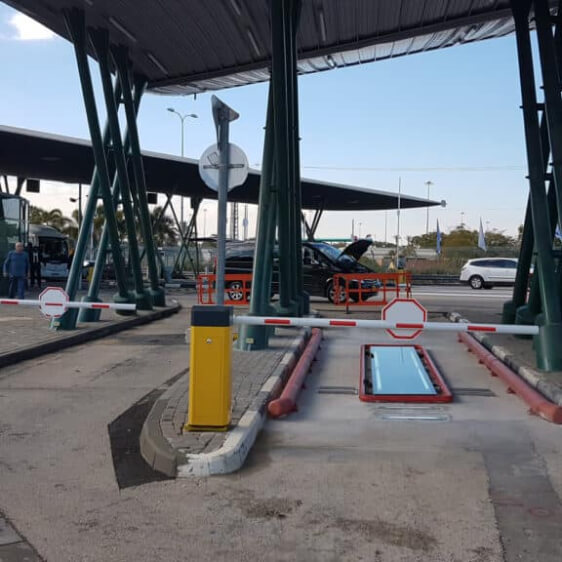
Barrier Mechanism: A horizontal arm (boom) typically 3–6 meters in length, raised and lowered by an electromechanical. Telescoping designs accommodate varying boom lengths while reducing footprint.
Motor and Drive System: Electromechanical motors provide the lifting and lowering force. Modern systems achieve opening/closing cycles in 3–8 seconds, supporting 40–80+ vehicle passages per hour.
Access Control Integration: RFID readers, number plate recognition (ANPR), biometric systems based credentials verify vehicle authorization before the boom rises.
Control Logic and Monitoring: Microprocessor-based controllers manage motor operation, access rule enforcement, emergency override functions, and system diagnostics. Integration with parking management systems, toll collection systems, and security networks provides centralized monitoring and reporting.
Safety Features: Loop detectors, photo sensors, and emergency manual override mechanisms ensure safe operation and prevent equipment damage from vehicle collisions or electrical failures.
Traffic Flow Benefits: Quantified Improvements
Automatic boom barriers deliver measurable improvements in facility traffic efficiency:
Reduced Wait Times: Manual gate operation or security personnel verifying credentials creates bottlenecks. Automatic boom barriers equipped with RFID or ANPR systems can process 40–60 vehicles per minute, dramatically reducing queuing. A typical facility may experience 30–50% reduction in average passage time per vehicle.
Continuous Operation: Unlike security personnel shifts or manual gate operation, automatic systems operate 24/7 without service interruptions. This continuous availability supports peak-hour demand without congestion buildup.
Predictable Access Times: Residents, employees, or regular visitors experience consistent, rapid access, improving satisfaction and reducing facility-related complaints.
Scalability: Multi-lane boom barrier configurations accommodate facilities expecting growth without requiring infrastructure redesign. Adding additional boom gates supports increased traffic volume while maintaining security protocols.
Security and Access Control Architecture
The traffic flow benefit would be meaningless without corresponding security value. Automatic boom barriers enforce access control policies with precision impossible for security personnel to maintain across high-traffic volumes.
Credential Verification: RFID-based access control requires each vehicle to present valid credentials before boom activation. Lost or fraudulent cards can be instantaneously revoked through the system control panel.
ANPR Integration: Advanced number plate recognition systems maintain whitelists of authorized vehicles. Unregistered or blacklisted vehicles trigger security alerts, enabling rapid response to unauthorized access attempts.
Multi-Factor Verification: Integrated biometric credentials provide enhanced security, associating vehicle access with specific authorized individuals rather than generic cards or license plates.
Audit Trails and Reporting: Automatic systems log every passage event—vehicle ID, time, authorization status—creating comprehensive audit records. Unauthorized access attempts or unusual traffic patterns are immediately flagged for security review.
Emergency Override: Manual emergency functions allow authorized personnel to override access control restrictions during genuine emergencies, ensuring evacuation access or emergency response.
Applications: Where Boom Barriers Deliver Maximum Value
Commercial Office Complexes: Multi-tenant office buildings use boom barriers to differentiate employee parking from visitor areas, controlling access to restricted zones and enabling automated validation of visitor parking passes.
Residential Societies and Gated Communities: Apartment complexes deploy boom barriers at main entry/exit, controlling resident vehicle access and monitoring guest entries. Integration with resident access cards provides seamless daily experience while maintaining security perimeter.
Toll Plazas and Highways: Automatic boom barriers integrated with toll collection systems enable cashless, electronic toll payment, reducing congestion and enabling open-road tolling infrastructure.
Parking Facilities: Multi-story parking structures or standalone parking lots use boom barriers with automated billing integration. Vehicles receive entry tickets, exit ticket scanning triggers boom gate opening, and parking fees are calculated and charged automatically.
Industrial Facilities and Manufacturing: High-traffic factories require rapid vehicle throughput while restricting access to authorized personnel. Boom barriers with RFID integration manage incoming material deliveries, outgoing shipments, and employee vehicle traffic efficiently.
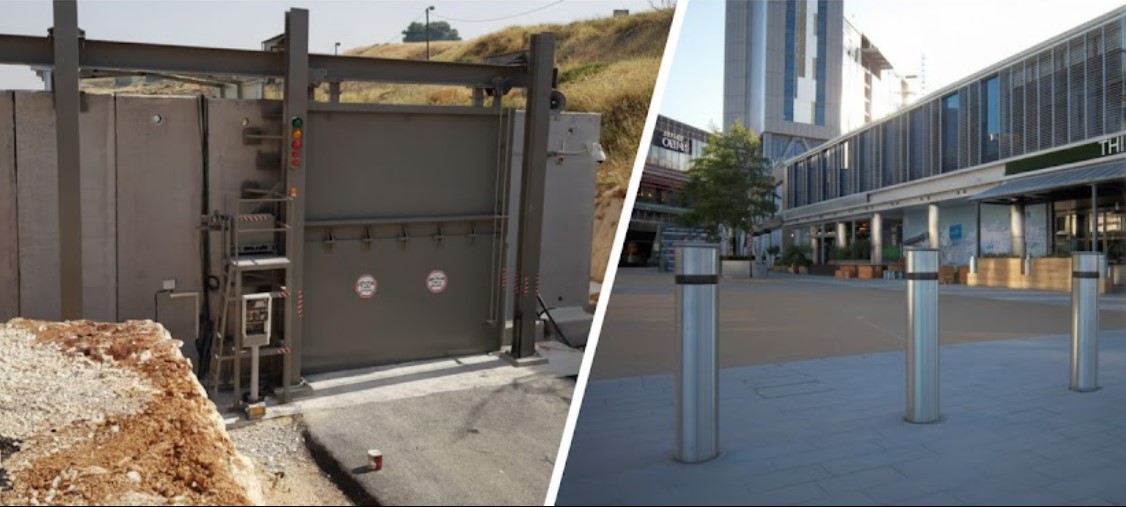
Data Centers and Critical Infrastructure: Facilities housing sensitive operations deploy boom barriers as the primary perimeter access control, coordinated with crash-rated bollards and security personnel.
Design Considerations for Optimal Performance
Successful boom barrier deployment requires attention to several design factors:
Approach Geometry: Adequate queue space before the barrier prevents backup onto adjacent roads. Geometry should accommodate vehicle stopping distance without creating unsafe configurations. Single-lane vs. multi-lane designs depend on expected traffic volume and facility layout.
Lighting and Signage: Clear illumination of the boom gate and status indicators (green for authorized passage, red for denied access) guides drivers effectively. Advance signage warning of access control requirements reduces confusion and accidents.
Weather Resistance: Automatic boom barriers deployed outdoors require IP44+ protection rating to withstand rain, dust, and temperature extremes. Corrosion-resistant coatings and sealed motor compartments ensure reliable operation across climatic conditions.
Emergency Procedures: Facilities must establish clear procedures for emergency vehicle access (fire, ambulance, police), manual override operation, and power failure contingencies. Training for security personnel ensures safe operation and emergency response capability.
Integration Architecture: Boom barriers should integrate with broader facility security networks—access control systems, security cameras, alarm systems—rather than operating as isolated devices. Centralized monitoring enables rapid response to security events.
Automatic Boom Barriers Across India: Market Growth and Adoption
India’s infrastructure expansion—particularly growth in commercial office development, residential communities, and toll infrastructure—is driving rapid adoption of automatic boom barriers. Government smart city initiatives and emphasis on efficient traffic management further accelerate deployment.
BGI Engitech serves as a leading manufacturer of automatic boom barriers across India, with systems deployed at major corporate office parks, residential developments, toll plazas, and government facilities. Our solutions are engineered specifically for Indian climatic conditions and operational requirements.
Conclusion
Automatic boom barriers represent the intersection of traffic efficiency and security control. By automating vehicle verification and barrier operation, facilities improve traffic flow, reduce congestion-related delays, and simultaneously enhance security through digital access control. For any facility managing multiple vehicle passages—residential complexes, office parks, toll infrastructure—automatic boom barriers deliver both operational and security benefits.