

Tripod Turnstiles: Compact entry points present unique challenges for facility managers. Installing full-height gates or boom barriers often consumes valuable space or creates architectural constraints. Yet these confined access points still require sophisticated access control—distinguishing authorized from unauthorized individuals while managing large pedestrian volumes efficiently.
Tripod turnstiles solve this dilemma. These three-armed rotating gates provide high-security access control in remarkably compact footprints. Originally deployed in metro transit systems to manage passenger flows, tripod turnstiles have expanded into corporate offices, industrial facilities, academic institutions, and government buildings requiring sophisticated pedestrian access control in space-constrained environments.
Tripod Turnstile Architecture and Operation
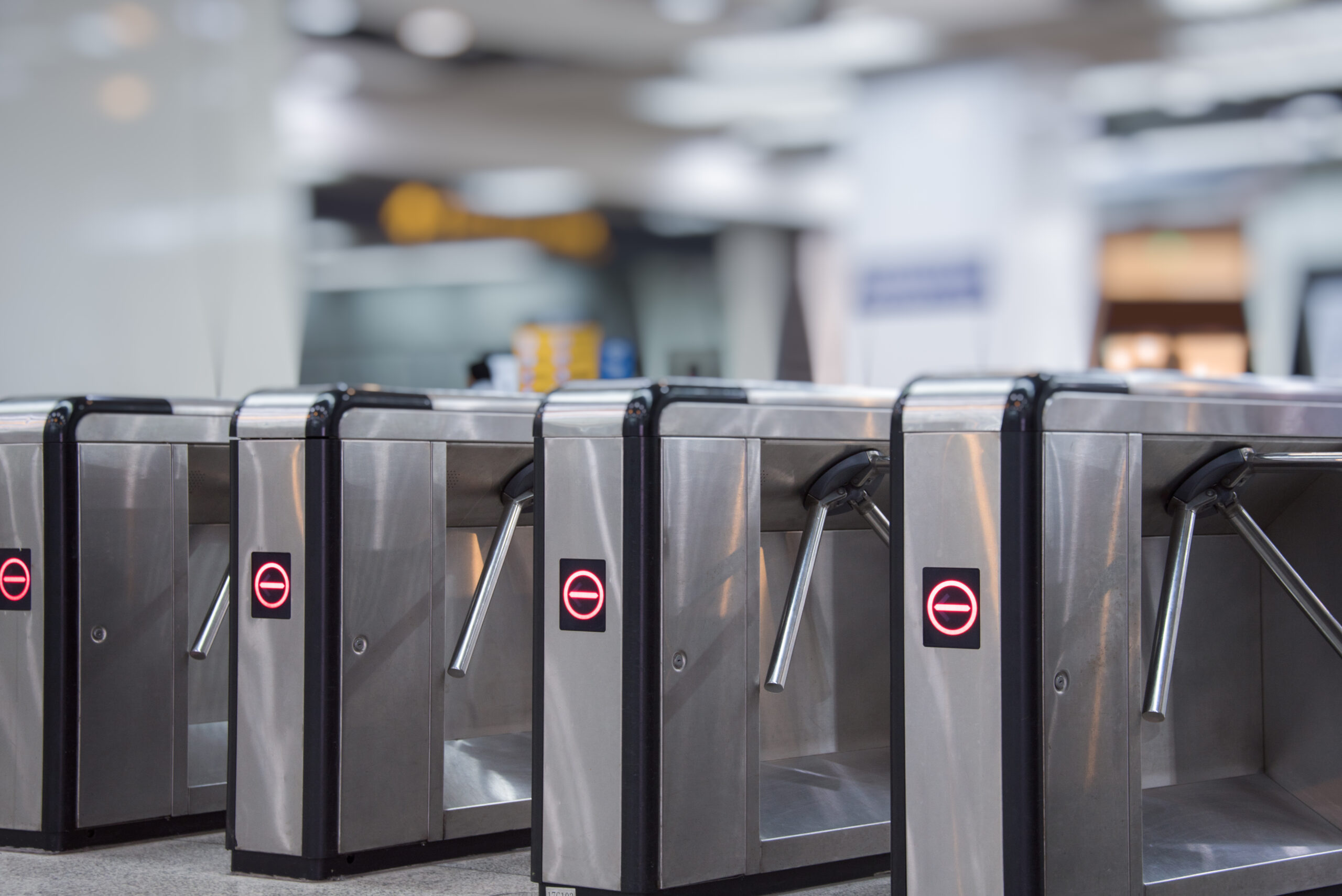
A tripod turnstile consists of three horizontal bars arranged 120 degrees apart around a vertical central axis. Users present credentials (RFID card, biometric identifier, mobile credential) at an integrated or external reader. Upon authentication, the turnstile motor rotates, allowing one arm to pass through the gate passage zone—typically 490 mm wide—before stopping. Unauthorized individuals cannot proceed; the mechanical stop prevents any passage without valid credential authentication.
Key Design Characteristics:
Compact Footprint: Installation typically requires only 420mm x 870mm making tripod turnstiles suitable for narrow hallways, stairwell landings, and confined entrance lobbies where full-height gates cannot fit.
High-Grade Stainless Steel: Most commercial tripod turnstiles use 304-grade stainless steel construction, ensuring durability across hundreds of thousands of operational cycles and providing superior corrosion resistance in humid or coastal environments.
Bi-Directional Operation: Advanced models support both entry and exit control through the same unit, with configurable logic distinguishing allowed passage direction based on credential type or time of day. This flexibility enables single-unit deployments where space constraints prohibit separate entry and exit gates.
Fail-Safe Emergency Operation: During power failure or emergency evacuation, tripod arms automatically drop to the horizontal position, enabling unrestricted pedestrian egress. This safety feature ensures compliance with emergency access regulations.
Access Control Integration: From RFID to Biometrics
Tripod turnstiles integrate seamlessly with modern authentication technologies:
RFID Card Systems: Employees or authorized visitors present proximity RFID cards at an external reader. The turnstile system verifies card validity against an access control database and rotates arms accordingly. Lost or revoked cards are instantaneously deactivated, providing precise access control with minimal administrative overhead.
Biometric Recognition: Advanced tripod turnstiles integrate fingerprint readers, facial recognition systems, or iris scanning directly into the gate unit. Biometric authentication eliminates the need for physical credentials (cards, badges), improving security and convenience.
Mobile Credentials: QR code scanning or near-field communication (NFC) technology enables smartphone-based access. Employees use mobile apps rather than physical credentials, supporting modern workplace flexibility and improving security through encrypted digital verification.
Multi-Factor Authentication: High-security facilities combine multiple credential types—RFID card plus PIN code, or biometric plus temporal restrictions. This layered approach prevents unauthorized access through single-credential compromise.
Pedestrian Flow Optimization and Throughput
While security is paramount, tripod turnstiles must also manage pedestrian movement efficiently. Design innovations support high-throughput applications:
Opening/Closing Time: Modern electromechanical tripod turnstiles complete passage cycles in 0.5–1.5 seconds, supporting 40–80+ pedestrians per minute under normal conditions. Peak-hour flows may be managed with multiple units installed in parallel.
Configurable Passage Width: Standard passages accommodate 520 mm (narrow, single-file) to 900 mm (comfortable single passage), with custom configurations available for specific requirements.
Bi-Directional Flow Control: When configured for mixed entry and exit, bi-directional turnstiles reduce required gate count compared to dedicated single-direction alternatives. A single bi-directional unit can replace separate entry and exit gates in some applications.
Motorized Servo Control: Advanced servo-driven turnstiles provide programmable acceleration and deceleration profiles, enabling smooth passenger experience even during rapid successive passages.
Applications: Where Tripod Turnstiles Excel
Metro and Transit Systems: Original application. Tripod turnstiles manage millions of daily passenger entries in mass transit systems worldwide, balancing throughput with access control and fare verification.
Corporate Office Complexes: Modern office buildings use tripod turnstiles at lobby entry points to distinguish employees from unauthorized visitors. Integration with building security systems tracks personnel movement and identifies after-hours building entry.
Industrial Facilities and Manufacturing: Factories use tripod turnstiles to restrict unauthorized personnel access to production areas. Biometric integration ensures only trained staff can enter dangerous zones.
Data Centers and Secure Facilities: High-security installations use tripod turnstiles as the primary access control at secure server rooms or restricted areas, often coordinated with multi-factor authentication to prevent credential compromise.
Academic Institutions and Campuses: Universities use tripod turnstiles to restrict access to restricted zones (research labs, administrative offices) while maintaining open campus atmosphere for legitimate students and staff.
Government Buildings and Embassies: Diplomatic and administrative facilities deploy tripod turnstiles to control access to restricted floors or conference rooms.
Stadiums and Event Venues: Large capacity venues use tripod turnstiles at restricted areas, managing staff and authorized personnel access while accommodating high throughput during events.
Durability and Maintenance Considerations
Tripod turnstiles are engineered for continuous operation in high-traffic environments:
Mechanical Reliability: High-grade stainless steel construction and precision motor engineering support millions of operational cycles with minimal maintenance. Typical service intervals are 6–12 months for inspection and preventive maintenance.
Modular Design: Critical components—motors, control boards, solenoids—are designed for field replacement without disassembling the entire structure. This modularity reduces maintenance downtime and service costs.
Environmental Resistance: IP54+ protection ratings ensure resistance to dust, moisture, and temperature extremes typical in indoor facilities. Outdoor versions with enhanced corrosion protection are available for covered entry points.
Self-Diagnostics: Modern tripod turnstiles include integrated self-diagnostic systems monitoring motor function, solenoid operation, and sensor performance. Fault conditions trigger maintenance alerts enabling proactive problem identification before failure occurs.
Selection and Deployment Best Practices
Successful tripod turnstile implementation requires attention to several factors:
Space Availability: Accurate measurement of available installation width and depth ensures compatibility with facility geometry. Field surveys prevent costly installation delays from spatial conflicts.
Throughput Estimation: Calculate expected peak-hour pedestrian flow. Single turnstile units support 60–100 pedestrians per minute under ideal conditions. Higher volumes require multi-unit installations or supplementary single-direction gates.
Credential Strategy: Align turnstile authentication method with your access control philosophy. RFID card systems offer familiarity and low cost; biometric systems provide enhanced security and convenience but require enrollment.
Emergency Procedures: Establish protocols for manual override operation during power failures, system faults, or emergency evacuation. Training for security personnel ensures safe operation.
Integration Architecture: Tripod turnstiles should integrate with centralized access control systems enabling real-time monitoring, audit trail reporting, and coordinated policy enforcement.
BGI Engitech Tripod Turnstiles: Engineered for India’s Diverse Environments
BGI manufactures compact, high-capacity tripod turnstiles engineered for Indian climate conditions and facility requirements. Our systems integrate seamlessly with RFID, biometric, and mobile credential technologies, enabling facilities to implement sophisticated access control within space constraints.
Conclusion
Tripod turnstiles represent an elegant solution to a recurring facility design challenge: providing high-security access control within compact spatial footprints. Through mechanical reliability, sophisticated authentication integration, and optimized pedestrian flow, tripod turnstiles enable facilities to manage both security and operational efficiency simultaneously. For any facility with spatial constraints and moderate-to-high pedestrian throughput requirements, tripod turnstiles merit serious consideration.