

Modern Speed Gates & Flap Barriers for Premium Office Security:Contemporary office buildings, upscale commercial facilities, and government institutions demand access control solutions that provide sophisticated security without compromising architectural aesthetics. Traditional metal turnstiles or institutional-looking gates convey institutional austerity—appropriate for transit systems but misaligned with premium brand perception.
Flap barriers and speed gates solve this aesthetic-security tension through elegant design, smooth operation, and rapid passage capability. These modern pedestrian access control devices deliver sophisticated security features within architecturally refined form factors that enhance rather than detract from facility design.
Flap Barrier Technology and Architecture
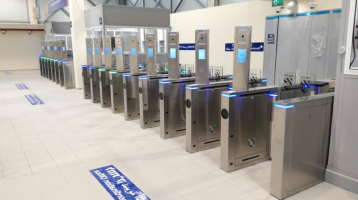
A flap barrier consists of a smooth housing (typically stainless steel or powder-coated aluminum) with one or more horizontally-oriented flaps that retract into the housing upon credential authentication. Users present RFID cards, facial recognition, QR codes, or mobile credentials at an integrated or external reader. Upon authentication, servo motors rapidly retract the flaps (typically in 0.3–0.5 seconds), enabling pedestrian passage through the now-open barrier lane.
Key Technical Characteristics:
Rapid Operation: BLDC motor actuation enables opening and closing cycles in 0.3–0.5 seconds, supporting 40–60 pedestrians per minute during peak flows. This rapid operation eliminates the institutional “slow gate” experience, creating frictionless user experience.
Modular Lane Architecture: Standard configurations support single lanes, double lanes (bidirectional), or multi-lane installations (two lanes in one direction). Custom configurations accommodate specific facility requirements.
Stainless Steel and Powder Coating: Premium finishes—brushed stainless steel, powder-coated aluminum in custom colors—enable integration with modern architectural palettes. Many high-end installations feature flap barriers finished to match interior design schemes.
Sealed Construction: IP54+ rated enclosures protect motors and electrical components from dust and moisture, ensuring reliability in diverse environmental conditions.
Integrated LED Status Indicators: Color-coded LED lights communicate gate status—green for authorized passage, red for access denied. Integrated audio prompts provide additional user guidance.
Aesthetic Integration: Beyond Functional Design
Modern flap barriers prioritize aesthetic integration at an architectural level:
Minimal Visual Obstruction: Unlike traditional turnstiles featuring prominent mechanical components, flap barriers present sleek line profiles minimizing visual impact in open lobbies or reception areas.
Architectural Color Coordination: Custom powder coating or anodized finishes enable barriers to match architectural specifications—from corporate brand colors to custom palettes coordinating with building interiors.
Contemporary Styling: Streamlined housing design, integrated lighting, and smooth surfaces convey technological sophistication aligned with premium corporate or government institutional environments.
Flexible Lane Widths: Passage widths can be customized from 520 mm (narrow, single-file) to 900 mm (comfortable standard passage), accommodating facility-specific accessibility requirements or accessibility standards.
Lighting Integration: Integrated LED status indicators or ambient lighting options enhance visibility while contributing to overall architectural ambiance.
Advanced Authentication Integration
Modern flap barriers support sophisticated authentication methods:
Facial Recognition: High-resolution cameras integrated into barrier housings enable facial recognition authentication without requiring credential presentation. Authorized personnel simply approach the barrier; facial recognition systems verify identity and automatically grant passage.
Biometric Integration: Fingerprint, iris, or other biometric authentication systems can be integrated into flap barrier control systems, providing highly secure, credential-free access.
Mobile and QR Credentials: Users present smartphone-based QR codes or NFC credentials for authentication, eliminating physical credentials while maintaining security.
Multi-Factor Authentication: Layered authentication requirements—facial recognition plus temporal restrictions, or biometric plus PIN code—provide enhanced security for high-value facilities.
Real-Time Identity Verification: Integration with centralized access control systems enables real-time verification, audit trail logging, and instantaneous revocation of compromised credentials.
Applications: Where Flap Barriers Excel
Premium Corporate Office Buildings: Modern office complexes use flap barriers to control access to executive floors, secure conference rooms, or restricted technical areas while maintaining aesthetically refined lobbies and reception areas.
Government Administrative Facilities: Federal, state, and local government buildings deploy flap barriers to control access to restricted administrative areas while projecting institutional professionalism.
Financial Institutions and Banking: Banks and financial services firms protect secure areas (trading floors, executive offices, vault rooms) with flap barriers that blend security with professional ambiance.
Healthcare Facilities: Hospitals and medical centers use flap barriers to restrict access to sensitive areas (operating theaters, pediatrics, psychiatric units) while maintaining welcoming reception areas.
Research Institutions and Universities: Academic facilities use flap barriers to control access to laboratory areas, specialized equipment rooms, or restricted collections while maintaining open campus environments.
Technology and Innovation Hubs: Modern tech company offices, startup incubators, and innovation centers use flap barriers to balance security with the open, collaborative culture these facilities promote.
Airports and Transportation: Major airport terminals, railway stations, and transit hubs use high-capacity flap barriers to manage staff and authorized personnel access to restricted operational areas.
User Experience and Operational Benefits
Beyond aesthetic and security advantages, flap barriers deliver measurable operational benefits:
Reduced Passage Friction: Rapid opening/closing cycles and smooth passage eliminate the hesitation or confusion users experience with traditional turnstiles. This reduced friction improves daily user experience and employee satisfaction.
Intuitive Operation: LED status indicators and audio prompts guide users clearly. Most personnel understand how to interact with flap barriers without training or signage.
Multi-Directional Flow: Bi-directional configurations enable entry and exit through the same unit, reducing required installations and improving traffic flow during peak periods.
Emergency Override: Fail-safe mechanisms enable rapid barrier opening during evacuations or emergencies. Manual override functions allow authorized personnel to manually open barriers if system faults occur.
Audit Trail and Analytics: Integration with access control systems creates detailed logs of every passage event—person, time, direction—enabling security analysis and occupancy monitoring.
Design Considerations for Optimal Performance
Successful flap barrier deployment requires attention to several factors:
Spatial Planning: Adequate queue space before barriers prevents congestion and user confusion. Installation should enable comfortable standing room for 3–5 people while maintaining sightlines and emergency egress requirements.
Sightline and Accessibility: Barrier placement and design should not obstruct security camera coverage, create visual blind spots, or impede accessibility for disabled personnel. Adequate passage width and height accommodate wheelchairs and mobility devices.
Credential Strategy: Align barrier authentication with your access control philosophy. Facial recognition offers maximum convenience and security; card-based RFID systems offer familiarity; mobile credentials support modern workplace flexibility.
Lighting and Signage: Adequate illumination of credential presentation areas and status indicators guides users effectively. Clear signage explaining credential presentation procedures reduces user confusion.
Emergency Procedures: Establish protocols for manual override operation, power failure contingencies, and emergency evacuation. Training for security personnel ensures safe barrier operation.
BGI Engitech Flap Barriers and Speed Gates: Premium Access Control
BGI manufactures and installs modern flap barriers and speed gates engineered for premium facilities across India. Our systems feature:
Custom powder-coat colors and finishes coordinating with architectural specifications
Seamless integration with facial recognition, biometric, and mobile credential systems
High-speed servo motor operation supporting peak-hour pedestrian flows
Aesthetic refinement appropriate for government, corporate, and institutional environments
Conclusion
Modern flap barriers and speed gates demonstrate that security and aesthetics need not represent competing design requirements. Contemporary barrier design delivers both sophisticated access control and architectural refinement. For any facility prioritizing both security and user experience—premium corporate offices, government buildings, or upscale institutions—flap barriers merit consideration as part of comprehensive access control strategy.