

Every building has a different access challenge. A hospital entrance has nothing in common with a corporate data centre gate and treating them the same is where most facility managers go wrong.
Walk through any major business park or government campus in India today and you’ll notice one thing: access barriers have become non-negotiable infrastructure. Yet despite this, a lot of buyers make the same mistake they pick a barrier based on price or looks, not on what the site actually needs.
Choosing the wrong barrier creates problems that compound over time: congestion at peak hours, security gaps, higher maintenance bills, and in some cases, liability. This guide breaks down exactly how to match the right barrier type to your building whether you’re building out a new facility or upgrading an existing one.
Start with the Problem, Not the Product
Before comparing specs or pricing, answer three questions:
- Who needs to be controlled?Pedestrian flow, vehicle entry, or both?
- What is the risk level?A residential colony has different threat exposure than a fuel depot or a defence facility.
- What does daily throughput look like?Barriers rated for 200 cycles a day will break down under 1,000 cycles.
These answers determine everything else barrier type, material grade, certification requirements, and integration needs (like boom barriers synced with parking management software or CCTV).
Barrier Types and When Each One Makes Sense
1. Flap Barriers: Ideal for High-Volume Pedestrian Areas
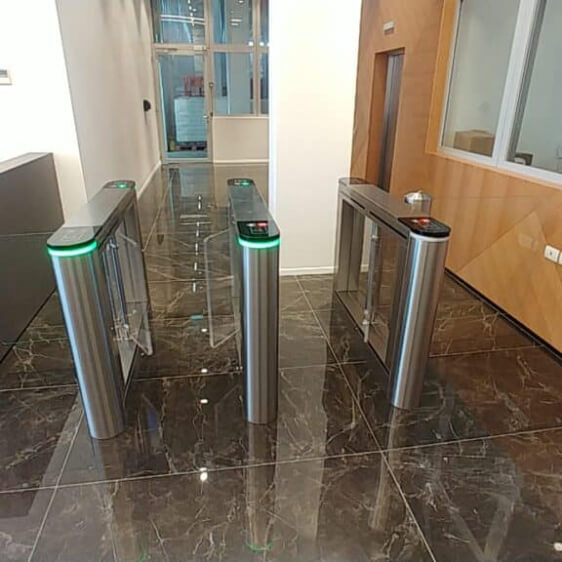
Flap barriers are a staple in metro stations, IT parks, office lobbies, and educational institutions. They’re fast, elegant, and designed for heavy footfall. A properly spec’d flap barrier handles 40–50 persons per minute per lane which no turnstile can match.
If you’re sourcing for a large facility, work with established Flap Barrier suppliers in india who can provide actual throughput data and integration support, not just product sheets.
2. Boom Barriers: For Vehicle Entry and Parking
Boom barriers are the most common entry control point for vehicles in India from residential societies to commercial complexes. They’re cost-effective and integrate easily with RFID, FASTag, and intercom systems. For general vehicle access, a boom barrier rated 4–6 metres with a 0.9-second cycle time is the standard.
Where the stakes are higher government facilities, data centres, fuel storage you need crash-rated variants that meet IWA 14 or PAS 68 certification. A standard boom barrier offers no real resistance to a vehicle impact.
Crash Rated Bollards: For Perimeter Vehicle Defence
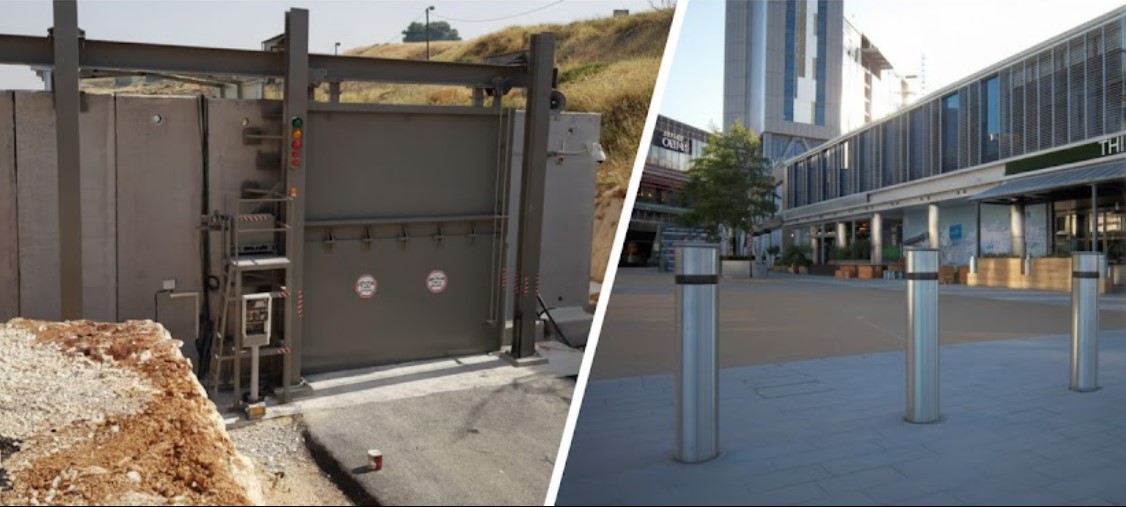
No access barrier article is complete without this one. Bollards are the last line of physical defence against vehicle-borne threats. For critical infrastructure power plants, embassies, railway stations specifying a Crash Rated Hydraulic Bollards Manufacturer in India-certified product is not optional.
The key certifications to ask for: ASTM F2656 (US standard), IWA 14-1 (ISO standard), and PAS 68 (UK-origin, widely referenced in India for government contracts). A manufacturer who cannot supply test reports against one of these hasn’t actually crash-tested their product.
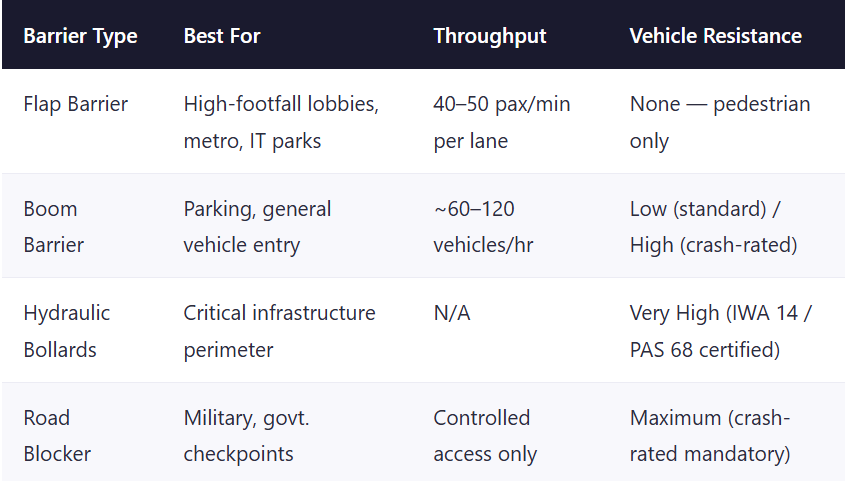
Quick Comparison: Barrier Types at a Glance
5 Factors That Actually Determine the Right Choice
- Traffic volume and peak hours.Calculate your busiest 60-minute window your barrier needs to handle that without queuing.
- Integration requirements.Will it connect with biometrics, ANPR cameras, fire alarms? Confirm protocol compatibility before buying.
- Power backup and fail-safe mode.Does the barrier fail-open (safer for evacuation) or fail-locked (better for security)? This decision depends on your building type.
- Certification and compliance.Government contracts and insurance underwriters increasingly require IWA 14, PAS 68, or IS certifications. Ask upfront.
- After-sales support.A barrier that goes down at 2am is useless without responsive service. Ask every Flap Barrier Manufacturer in India you evaluate for their AMC terms and average response time.
About BGI Engitech
BGI Engitech is an India-based manufacturer and supplier of crash-rated access control equipment covering flap barriers, crash-rated bollards, hydraulic road blockers, boom barriers, and perimeter security systems.
Our products are deployed across government facilities, defence installations, corporate campuses, and critical infrastructure sites across India. Every system we supply goes through documented testing protocols, and we provide complete documentation certifications, test reports, and compliance records as a standard part of every project.
We offer site assessments, custom specification support, installation, and annual maintenance contracts. Because the barrier you choose is only as good as the team that installs and supports it.
Ready to Spec the Right Barrier?
Looking for reliable Flap Barrier suppliers in india? Contact BGI Engitech today for a free site assessment and expert specification support. We’ll help you match the right system to your actual site requirements not just the nearest off-the-shelf option.
FAQs
Q1. What is a flap barrier used for?
A. A flap barrier is an automatic access control system used to manage pedestrian entry and exit in offices, metro stations, airports, commercial buildings, and secure facilities.
Q2. Why choose BGI Engitech as flap barrier suppliers in India?
A. BGI Engitech provides reliable flap barrier solutions designed for smooth operation, enhanced security, and efficient crowd management across different industries.
Q3. Where can flap barriers be installed?
A. Flap barriers are commonly installed in corporate offices, industrial plants, malls, hospitals, educational institutes, transportation hubs, and government facilities.
Q4. What are the benefits of using flap barriers?
A. Flap barriers offer controlled access, improved security, faster movement of people, reduced unauthorized entry, and easy integration with access control systems.
Q5. Does BGI Engitech provide customized flap barrier solutions?
A. Yes, BGI Engitech offers customized access control solutions based on site requirements, security needs, and operational preferences.