

Data centres contain critical digital infrastructure, sensitive information, and high value equipment. A security breach at the perimeter can create risks that extend far beyond the physical property.
For this reason, data centre security should begin at the outer boundary and continue through every vehicle, pedestrian, and service-access point.
Why perimeter security matters
A data centre may have strong cybersecurity systems, but physical access remains an important risk. Unauthorised vehicles, forced entry, tailgating, accidental collisions, and unauthorised deliveries can affect business continuity and infrastructure safety.
A layered perimeter-security plan helps create multiple controlled zones instead of relying on a single gate or security guard.
Key components of a secure perimeter
Crash rated bollards
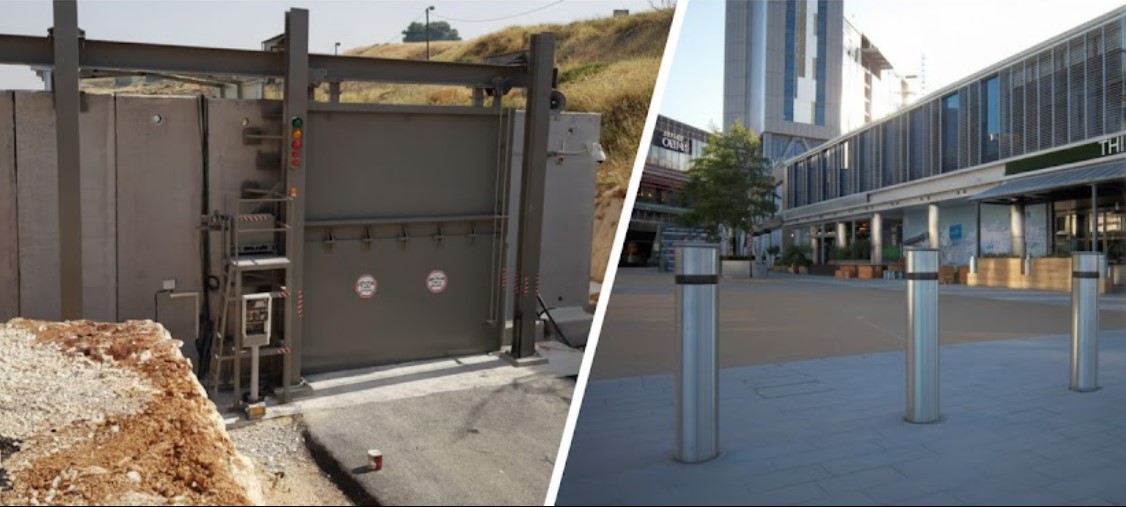
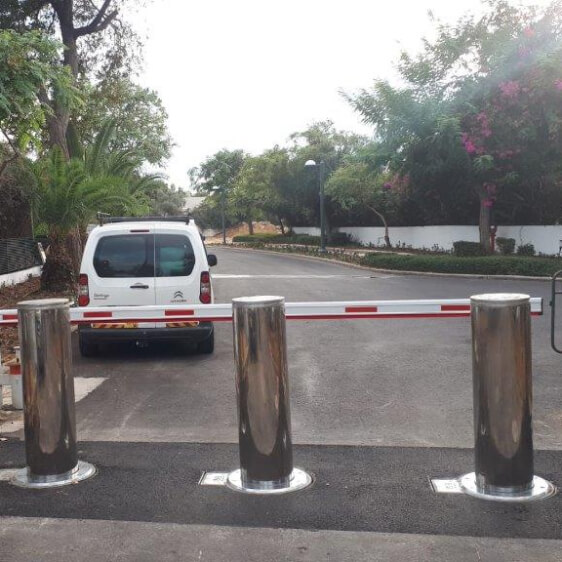
Crash rated bollards can be installed near buildings, loading zones, entrances, and critical infrastructure. They help create a physical barrier against unauthorised or high-speed vehicle access.
Road blockers
Road blockers are designed to stop vehicles across the full width of an entrance. They may be used at high-security vehicle gates where stronger anti-ram protection is required.
Automatic boom barriers
Boom barriers regulate routine vehicle movement at entry and exit lanes. They are useful for managing employees, contractors, visitors, and delivery vehicles.
Sliding and cantilever gates
Security gates can secure the outer boundary and control large vehicle openings. Cantilever gates are particularly useful where ground tracks may be difficult to install or maintain.
Turnstiles and flap barriers
Pedestrian-access systems help control employee and visitor movement. They can be integrated with access cards, biometric systems, and visitor-management software.
Tyre killers and spike systems
Tyre-killer systems can help prevent vehicles from entering through a restricted lane or moving against the permitted direction. Their use should be carefully planned with safety controls and clear signage.
Best practices for data centre perimeter planning
Create separate access zones
Employee vehicles, visitors, deliveries, emergency vehicles, and service contractors may require different access routes. Separating these flows can improve security and reduce congestion.
Integrate physical and digital controls
Barriers and gates should work alongside CCTV, intercoms, access cards, vehicle identification, alarms, and security-control software.
Provide anti-tailgating controls
A vehicle or person entering immediately behind an authorised user can bypass the intended security process. Lane design, sensors, turnstiles, and security procedures should work together to reduce this risk.
Include fail-safe operating procedures
The security system should define what happens during a power failure, network outage, fire alarm, or emergency evacuation. Manual override and emergency-release procedures must be documented and tested.
Consider maintenance from the beginning
Security equipment must remain operational at all times. The design should include access for inspection, drainage, replacement of components, preventive maintenance, and emergency service.
Choosing a security-system partner
A data-centre security supplier should be able to understand site risks, traffic flow, installation limitations, integration requirements, and operational procedures.
BGI Engitech supplies a range of perimeter-protection products, including crash-rated barriers, bollards, road blockers, gates, boom barriers, turnstiles, and other access-control systems.
Conclusion
Data centre perimeter security is most effective when it combines physical barriers, controlled access, surveillance, trained personnel, and reliable operating procedures. A layered approach can help protect the facility without disrupting authorised movement.
Planning security for a data centre or critical facility? Contact BGI Engitech to discuss a complete perimeter-protection solution.